
Bri's Story
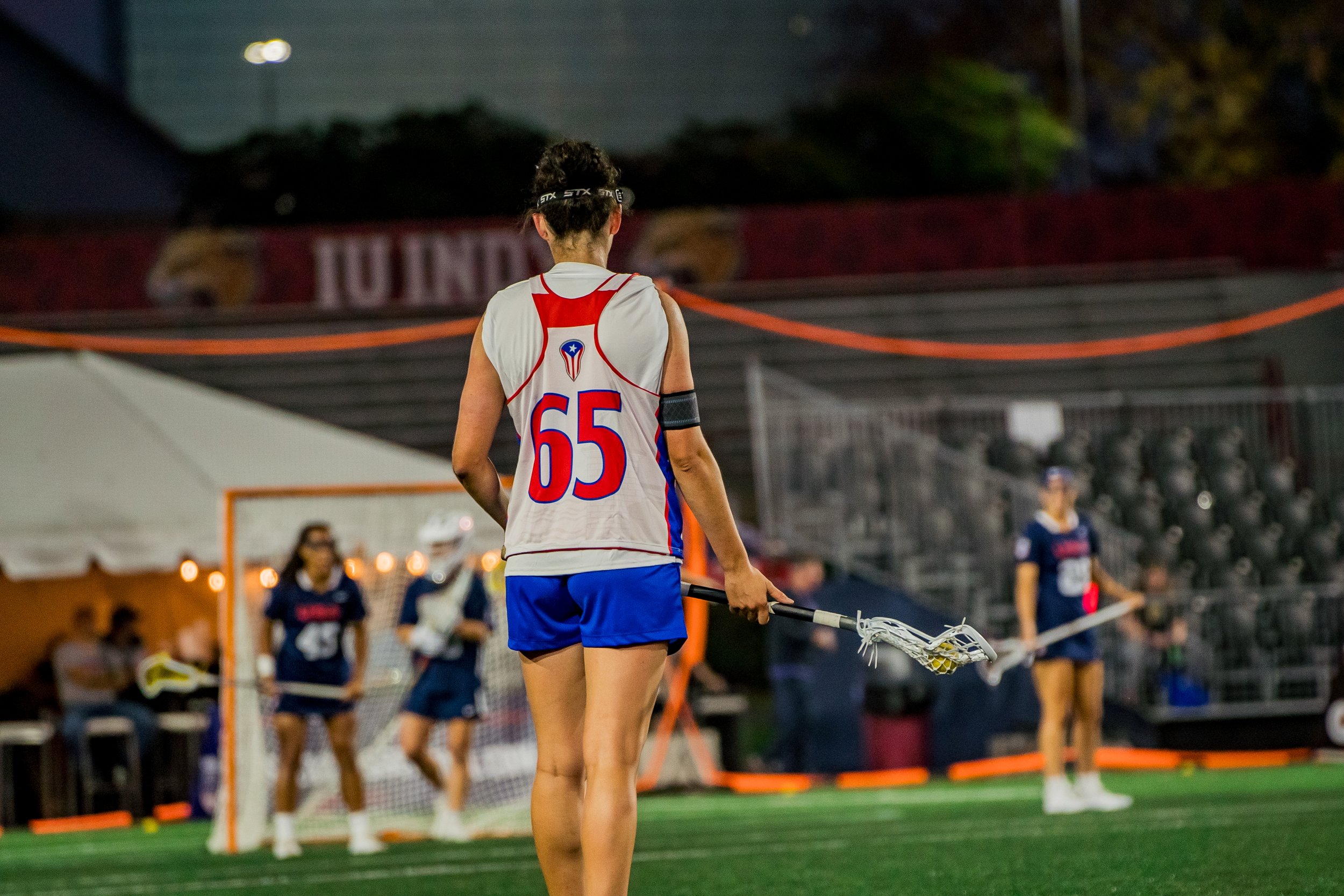
Spring 2020 was my first collegiate lacrosse season. I suited up in navy and white, “Y-A-L-E” painted across my chest, not knowing I’d only have the opportunity to do so six times that year. COVID-19 struck. My teammates and I were standing in a hollowed-out redwood tree on our spring break trip, prepared to take on Fresno State and UC Davis. Yale vs. Fresno State was the last game of the NCAA Women’s Lacrosse game that year. We won in overtime, I had the game winner.
Emotions were heightened as my teammates and I shipped back to the east coast with only a few days before we were sent home for the remainder of the spring semester. Gyms shut down and I was forced to embrace the Georgia humidity through long runs and bodyweight workouts in the back of Milton High School. But as Covid ramped up, motivation faded, and with it my discipline.
I averaged 10 hours of sleep a night, most of which was accompanied by mid-day naps. With chronic fatigue came muscle weakness. Bags formed under my eyes but they weren’t from feeling lethargic, it was healthy fat melting right off the bone. Twenty two pounds in two weeks left me a shell of a human. I emerged each afternoon with a haunted look, my skeletal features and alarmingly pale skin in the summer, an eyesore and a concern to my family.
Textbook symptoms became increasingly apparent. Soon I was peeing every 5-10 minutes. I was extremely dehydrated. I chugged every kind of liquid in sight - water, soda, apple juice, milk, etc. I was convinced the filtered water from the refrigerator was contaminated and causing my illness. My only steps were those walking to and from the bathroom, or late at night as I crept around the house to binge our pantry after surviving the day off of a bite of an Eggo waffle.
“You look great!” support from my mom and dad on what was thought to be a weight loss journey felt more like a slow decomposition before their eyes. I morphed into the couch with each passing day. It was evident that I was in fact not losing healthy weight, but my body was slowly killing itself and I needed immediate medical attention. My mom took me to my pediatrician, Dr. Faith, to see if she could offer hopeful sentiments towards my body’s questionable behaviors.
The attempted blood draw left me queasy and faint. The phlebotomist failed to penetrate my vein after several attempts. Option two was a urine sample, a much easier method for a girl who was peeing out ketones multiple times an hour. Minutes later Dr. Faith rushed back into the room. The carnival paintings on the walls of the Roswell Pediatric Center were a cruel contrast to the urgency and fear that filled the room.
Faith furrowed her brow, a perplexed and deeply concerned look washed across her face. Sternly, she said, “everything looks fine except for one thing. Your glucose level in your urine is over 1,000, which likely indicates a case of Type 1 Diabetes. Do you know what this means?”
I obviously didn’t, but it didn’t prevent the waterfall that spouted from my eyes. I sobbed until Dr. Faith told me it was time to go to the emergency room. We grabbed my dad and headed straight to the Children’s Hospital of Atlanta, a place I’d call home for the next three days.
It was an interesting thing: rushing to the ER, sacrificing multiple lives driving well over the speed limit only to have me standing in line at a kiosk for nearly an hour only to be moved to a temporary bed with a fluid IV taped to my arm. Lying in the queue, a doctor came up to me about an hour later and confirmed my diagnosis,Type 1 Diabetes. He said he was glad I came in that day, because if I had waited I risked facing a near death experience - a diabetic coma.
I began my T1D journey mostly hypoglycemic, 1 unit to every 5 grams of carbohydrates. I eventually matured from that I:C and have been honeymooning ever since. Nearly 5 years later, I am on and off the Omnipod 5, but married to the Dexcom G7 CGM, so much so that I acquired an NIL deal with them in my sophomore year at Yale. Two degrees later and now a fifth year at the University of Oregon, I’ve never played with more confidence than when I do with medical technology strapped to my arm and upper thigh.
To say I was apprehensive about the return to sport is an understatement; I had no idea if I’d even be able to play lacrosse at all after being diagnosed. Luckily, the proper care and support system only amplified my lacrosse career. After Oregon, I’ll go on to compete in the 2028 LA Olympics, fulfill my dream of attending law school and becoming a practicing attorney, and settle down back on the east coast within distance of those who have been through the brunt of my struggle. Resilience follows me everywhere. I know that I am more than the plastic adhesive that TSA is quick to identify me by. Above all else, my T1D is my greatest strength, my biggest stressor, and my proudest feat. Every day brings new challenges, new numbers, new battles, but I am battle tested.
Bri Carrasquillo